COTTAGE CHEESE AND CULTURED BUTTER
COTTAGE CHEESE and CULTURED BUTTER are versatile dairy products that allow producers to create multiple product styles from a single base process. With the right cultures and simple processing adjustments, you can expand your range without complicating production.
Below is a practical guide covering chunky vs smooth COTTAGE CHEESE and options for producing CULTURED BUTTER.
SMOOTH VS CHUNKY COTTAGE CHEESE: ONE RECIPE, TWO TEXTURES
The good news for producers is that the same generic chunky cottage cheese recipe can be used to create both chunky and smooth variants.
How to Make Smooth Cottage Cheese
Once chunky cottage cheese has been produced:
* Pump the finished chunky cottage cheese through a homogeniser.
* Recommended pressure: 60 - 80 bar.
* After homogenisation, pack immediately.
No alternative recipe is required.
The texture change is achieved purely through mechanical treatment, not formulation changes. This allows producers to simplify inventory, training, and quality control while still offering multiple product formats.
CULTURED BUTTER: CREATING DISTINCT FLAVOUR PROFILES
CULTURED BUTTER is made by fermenting cream before churning, resulting in enhanced aroma, flavour complexity, and mouthfeel compared to sweet cream butter. Several culture options can be used, depending on the flavour profile you want to achieve.
Culture Options for Cultured Butter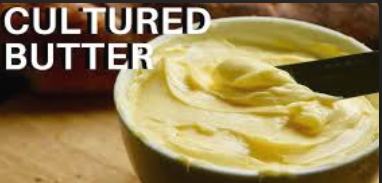
1. Yoghurt Culture: Lyofast Y 438 A
* Incubation temperature: ± 25 ºC
* Fermentation time: 12 - 24 hours
* Flavour profile: Mild acidity, clean and creamy with subtle yoghurt notes
2. Maas Culture: Lyofast MW 035 TA
* Incubation temperature: ± 22 ºC
* Fermentation time: 12 - 24 hours
* Flavour profile: Traditional cultured dairy taste, slightly tangy and rounded
3. Kefir Culture: Lyofast MTX 432 EN
* Incubation temperature: ± 25 ºC
* Fermentation time: 12 - 24 hours
* Flavour profile: More complex and aromatic, with light buttery and fermented notes.
4. Blended Culture Option
For a unique, signature cultured butter, producers can experiment with a combination of all three cultures. This creates layered flavour complexity and differentiation in the final product.
Culture Dosing and Processing Guidelines
* Always add cultures to pasteurised cream.
* Dose rate: 5 UC per 1 000 L of cream.
* Ensure even distribution by mixing thoroughly after inoculation.
* Allow fermentation under controlled temperature conditions.
* Once the desired acidity and flavour are achieved, follow standard butter-making steps:
* Churning,
* Washing,
* Working,
* Salting (if required),
* Packing.
Benefits of Cultured Butter
* Enhanced flavour and aroma.
* Improved spreadability.
* Premium, artisanal positioning.
* Greater product differentiation with minimal process changes.
FINAL THOUGHTS
By using one cottage cheese base recipe and simple mechanical processing, producers can easily offer both chunky and smooth variants. Similarly, cultured butter allows for creative flavour development through smart culture selection - without altering the core butter-making process.
These approaches provide flexibility, product differentiation, and premium positioning, all while keeping production efficient and controlled.